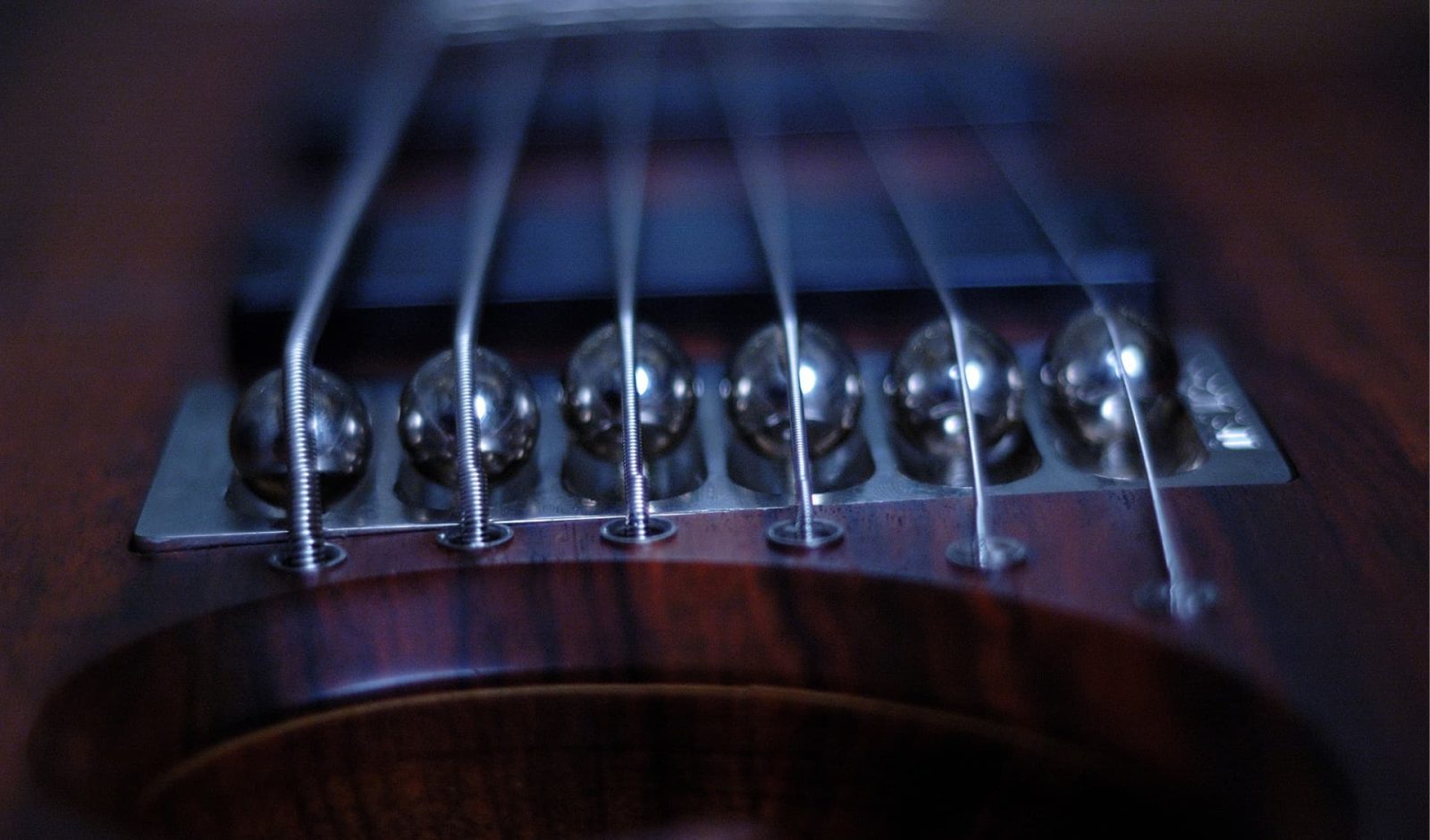
Nexus Sphere Bridge
A physics-driven bridge design that redefines energy transfer in stringed instruments. The Nexus Sphere Bridge eliminates parallel reflections, improving sustain, resonance, and tonal clarity — even before the instrument is plugged in.
The idea behind the Nexus Sphere Bridge — and eventually the entire bridge built around it — first emerged in 2004. Over the following years, I developed the concept step by step, methodically solving the challenges that inevitably appear when theoretical assumptions meet real-world design constraints.When asked “What is the most precious resource in instrument design?” my answer has always been the same: energy.
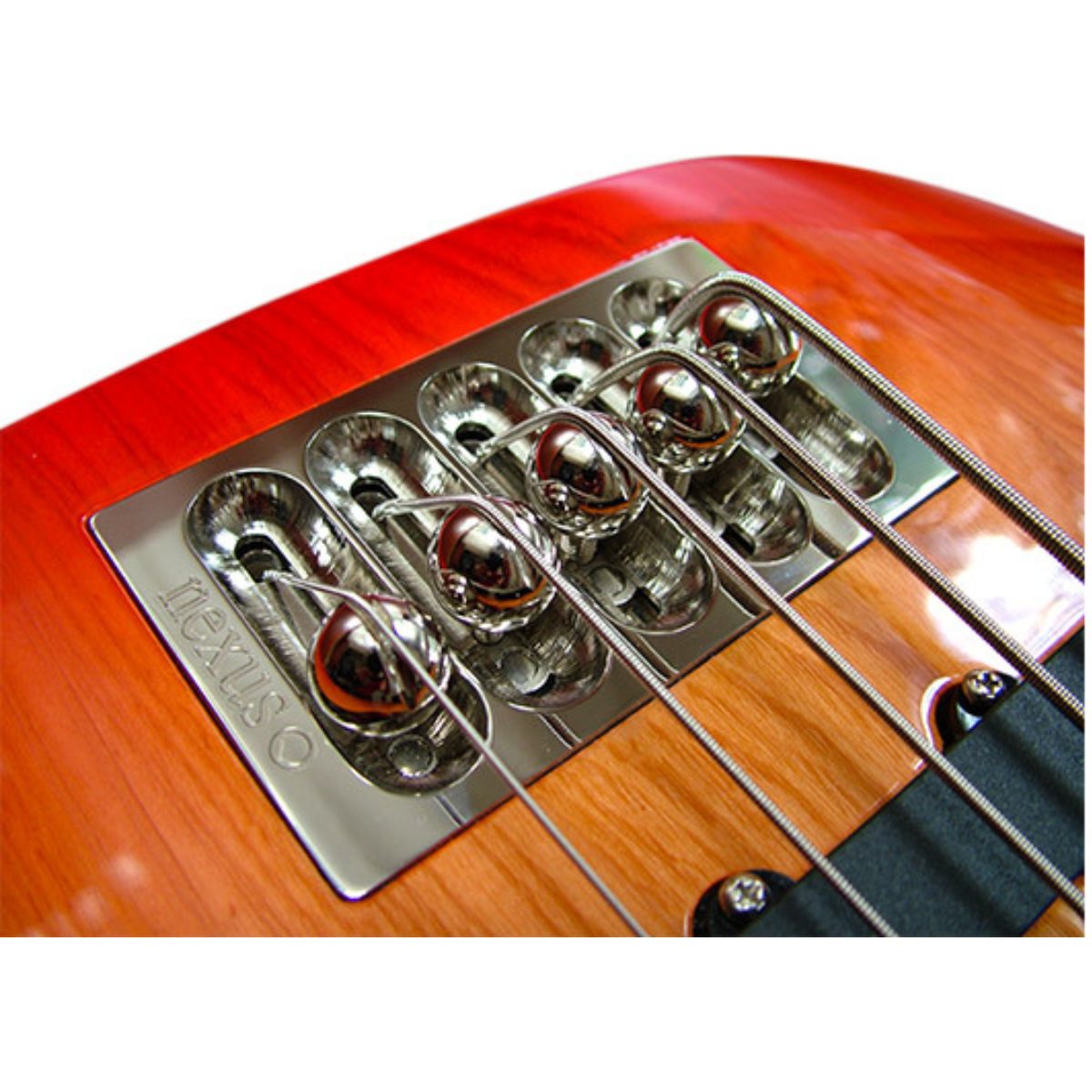
Energy is what we strive to preserve at every stage of the construction process — from wood selection and seasoning, through component design, to the finished instrument. The less energy we lose along the way, the more efficiently it reaches the pickups. The result is a stronger, more responsive signal and a clearer, more defined sound. Of course, ergonomics and aesthetics are essential elements of any instrument, but here I would like to focus purely on the physical principles behind the Sphere Bridge.
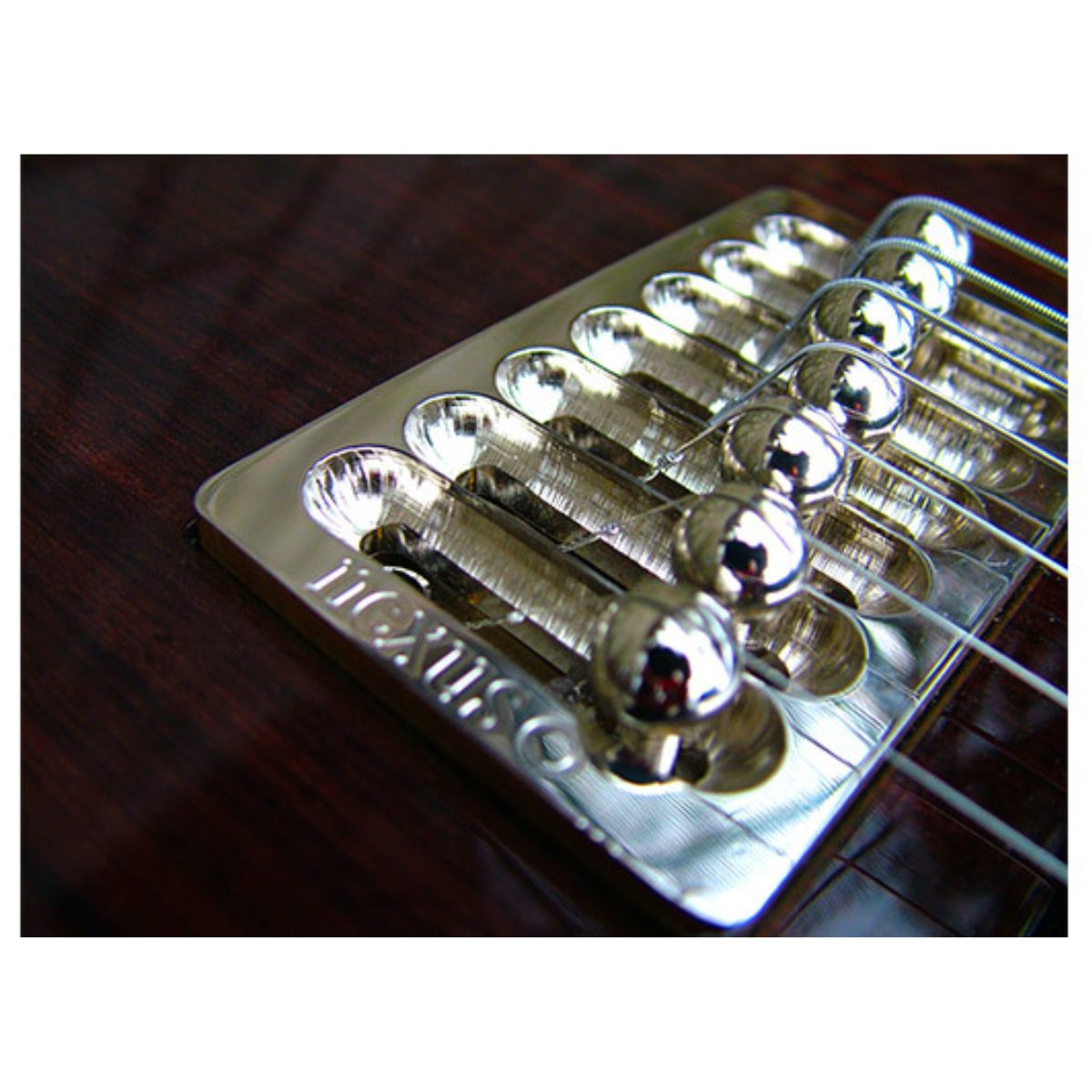
Traditionally, bridge saddles in guitars and basses have been based on cylindrical or cuboid shapes. Both share a fundamental flaw: parallel reflection of energy. This creates interfering waves and energy loss at the saddle level. But what if the saddle geometry could eliminate that problem altogether?
The answer was a sphere.
By using a spherical saddle, string energy is transferred evenly and directly into the saddle, then through the threaded mounting into the anchoring plate and finally into the instrument body — without parallel reflections or destructive interference. The energy flow remains coherent and uninterrupted. The result is a sound with greater sustain, improved clarity, and a noticeably stronger fundamental.
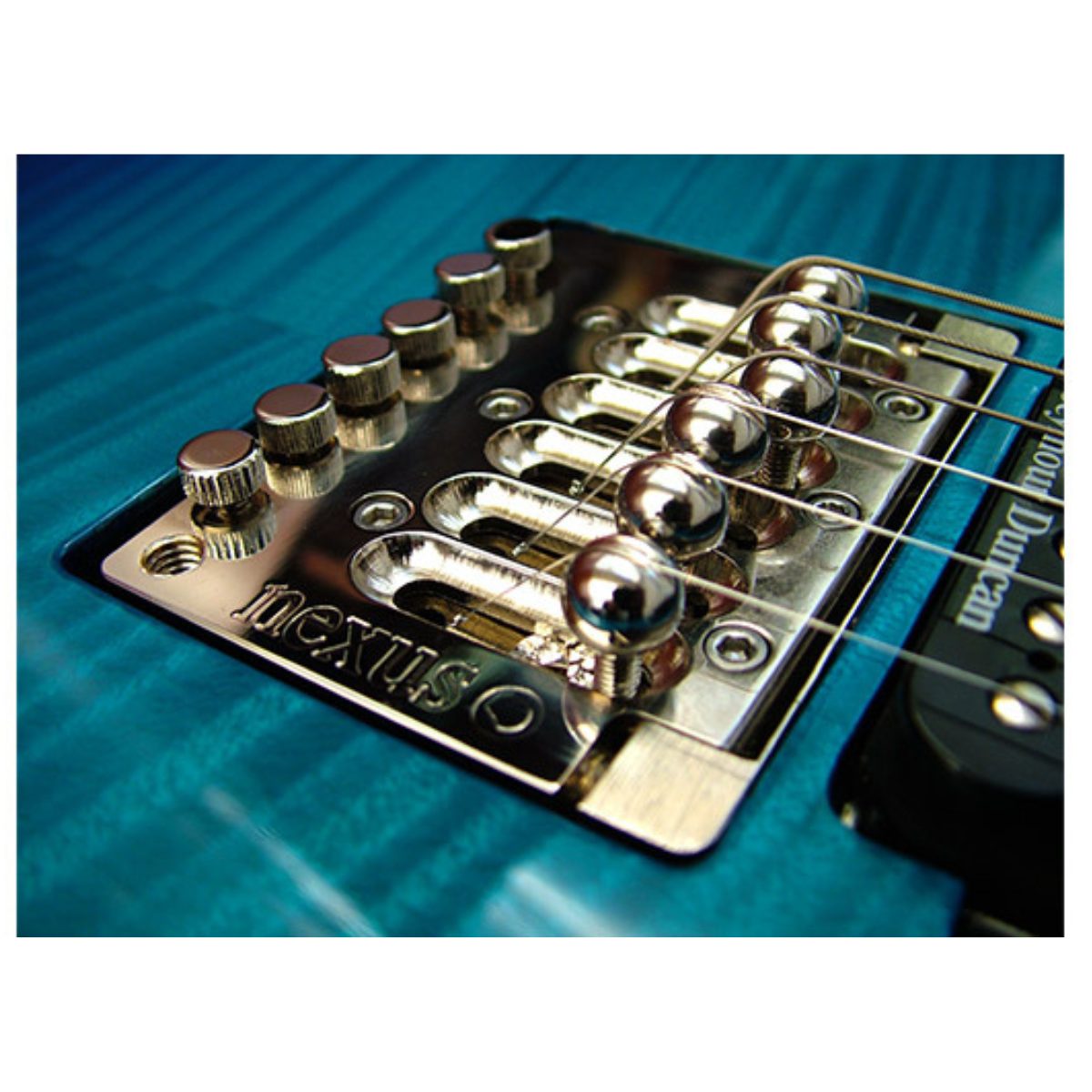
What is remarkable is that this difference is perceptible even before plugging the instrument in. Simply holding it against your body, you can feel the entire structure resonate — the instrument truly comes alive.
In my view, the spherical saddle threaded into an anchoring plate is not only an elegant mechanical solution, but a design deeply rooted in the principles of theoretical physics. More importantly, it serves as proof that instrument design still holds unexplored territory. There are countless opportunities to rethink established solutions, apply scientific reasoning, and bring traditional concepts into a modern, physics-aware standard.